Roast turkey brings warmth, joy, and that mouthwatering aroma everyone waits for on Thanksgiving day. The golden skin, the juicy meat, and the buttery herbs make it a showstopper. It’s surprisingly simple to prepare once you know the right steps. With this guide, you’ll learn how to roast turkey perfectly—crispy outside, tender inside, and ready to impress every guest at the table.

Table of Contents
Why Roast Turkey is a Thanksgiving Classic
Every Thanksgiving table feels incomplete without a roast turkey at the center. Its comforting flavors, savory aroma, and family-style serving make it more than just food—it’s tradition. People gather around it, carving, laughing, and sharing stories. That’s why roast turkey remains the heart of the celebration year after year.
What You’ll Learn in This Guide
You’ll discover how to select the right turkey size, thaw it safely, season it properly, and roast it to juicy perfection. You’ll also learn storage tips, carving tricks, and simple flavor upgrades to keep your bird tender every time.
Choosing the Right Turkey Size
Getting the right turkey size keeps everyone fed and happy without leftovers taking over your fridge. Generally, you’ll need about 1 to 1.25 pounds per person. However, if you’re serving big eaters or want guaranteed leftovers for sandwiches, go slightly larger. A 14- to 16-pound turkey works well for most gatherings.
How Many Pounds Per Person
Plan one pound per person for a smaller feast and up to 1.25 pounds if you want seconds. For instance, a 14-pound bird feeds around 12 people comfortably. Always round up, since turkey shrinks slightly during roasting.
Planning for Leftovers
Leftovers are half the fun. Roasted turkey stays fresh in the fridge for up to four days. You can freeze extra slices for up to three months. Use them later for soups, sandwiches, or casseroles to stretch your feast even further.
Thawing Your Turkey Safely
A frozen turkey needs time to thaw correctly for safe, even cooking. The safest method is in the refrigerator, where the temperature stays consistent. Never thaw your turkey on the counter, as it can invite bacteria. Always keep it wrapped, placed on a tray, and away from fresh produce.
Refrigerator Thawing Timeline
Thaw your turkey for one day per five pounds in the fridge. A 15-pound turkey takes about three full days to thaw completely. Plan ahead and give it plenty of time.
Signs Your Turkey Is Fully Thawed
Your turkey is ready when the cavity feels soft, and you can easily move the legs. Check for leftover ice crystals—if there are any, it needs more time. A fully thawed turkey feels pliable but cool to the touch.
Prepping the Turkey Before Roasting
Proper prep makes all the difference between a dry bird and a juicy one. Remove packaging, giblets, and any excess liquid first. Then pat it completely dry to help the skin crisp beautifully in the oven.
Removing Giblets and Drying the Bird
You’ll usually find giblets inside the cavity. Take them out before seasoning. Next, pat every part of the turkey dry with paper towels—this step helps the butter stick better and ensures even browning.
To Brine or Not to Brine
Brining adds moisture but isn’t necessary if your turkey is already pre-brined. If you brine, skip extra salt later. A dry brine works best overnight with a sprinkle of kosher salt and herbs. It tenderizes the meat while keeping the flavor balanced.
Herb Butter and Seasoning Tips
Herb butter gives your roast turkey a fragrant, golden crust and locks in juices. Mix softened butter with fresh sage, thyme, rosemary, garlic, salt, and pepper for a rich aroma.
Mixing Herb Butter with Garlic and Spices
In a small bowl, combine butter, minced garlic, and herbs until smooth. This mixture creates incredible flavor and melts into the meat as it roasts.
Rubbing Butter Over and Under the Skin
Carefully lift the skin and spread the butter underneath, then over the top. This step seasons the turkey inside and out, giving you crispy, golden skin and juicy, flavorful bites every time.
Stuffing and Aromatics for Flavor
Stuffing the cavity with aromatics instead of bread helps the turkey stay moist and fragrant. Lemons, garlic, and fresh herbs release steam that perfumes the meat from within.
What to Place Inside the Cavity
Add halved lemons, whole garlic cloves, and sprigs of rosemary, thyme, and sage. These infuse the bird with gentle, savory notes without overpowering the natural taste.
Why Stuffing Should Be Cooked Separately
Cooking stuffing inside the turkey can lead to uneven heating. Bake it separately instead. You’ll get better texture, safer cooking, and more flexibility with seasoning.
How to Roast Turkey at 350°F
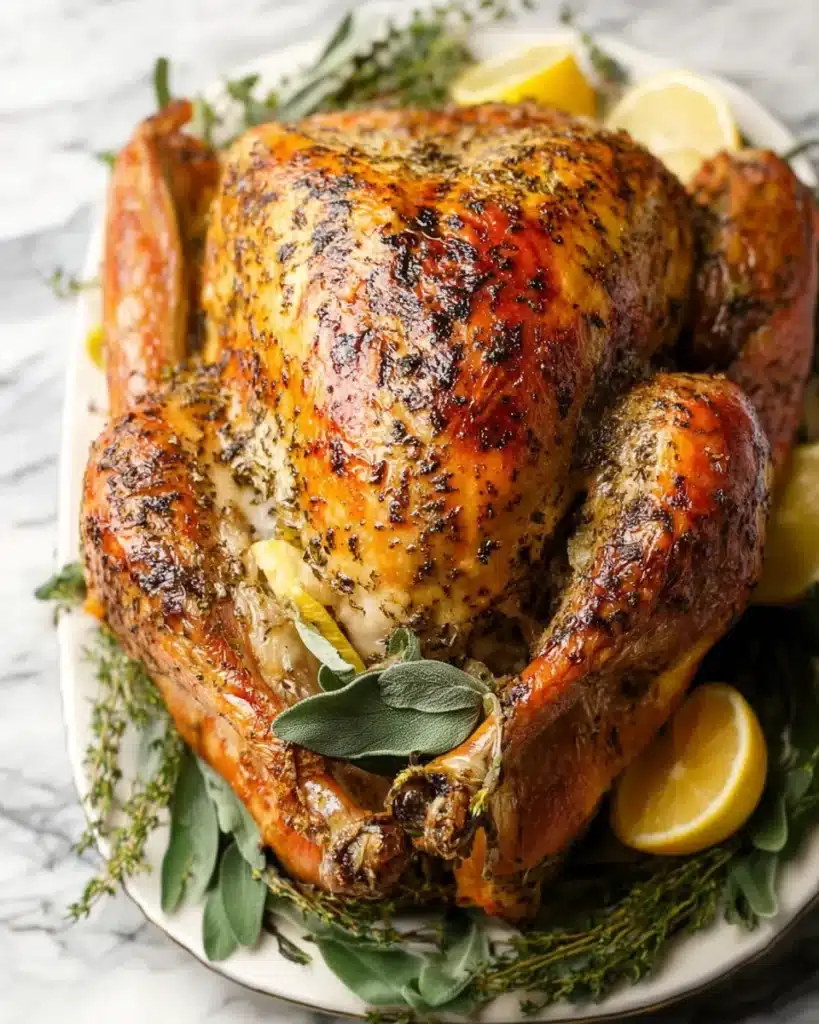
Start by preheating the oven to 450°F, then lower it to 350°F once the turkey is in. This quick temperature shift helps brown the skin early while keeping the inside juicy.
Oven Setup and Temperature Changes
Place the turkey breast-side up on a roasting rack inside a sturdy pan. Adjust your oven rack to the lower third for best air circulation. Once the turkey goes in, drop the temperature to 350°F for slow, even cooking.
Cooking Time by Weight and Doneness Check
Roast about 13 minutes per pound. A 14-pound turkey cooks in roughly three hours. Always check with a meat thermometer—the thickest part of the thigh should reach 165°F before you pull it out.
Preventing Over-Browning with Foil
If the skin darkens too soon, tent the top loosely with foil. This helps balance browning without sacrificing crispness.
Resting and Carving the Turkey
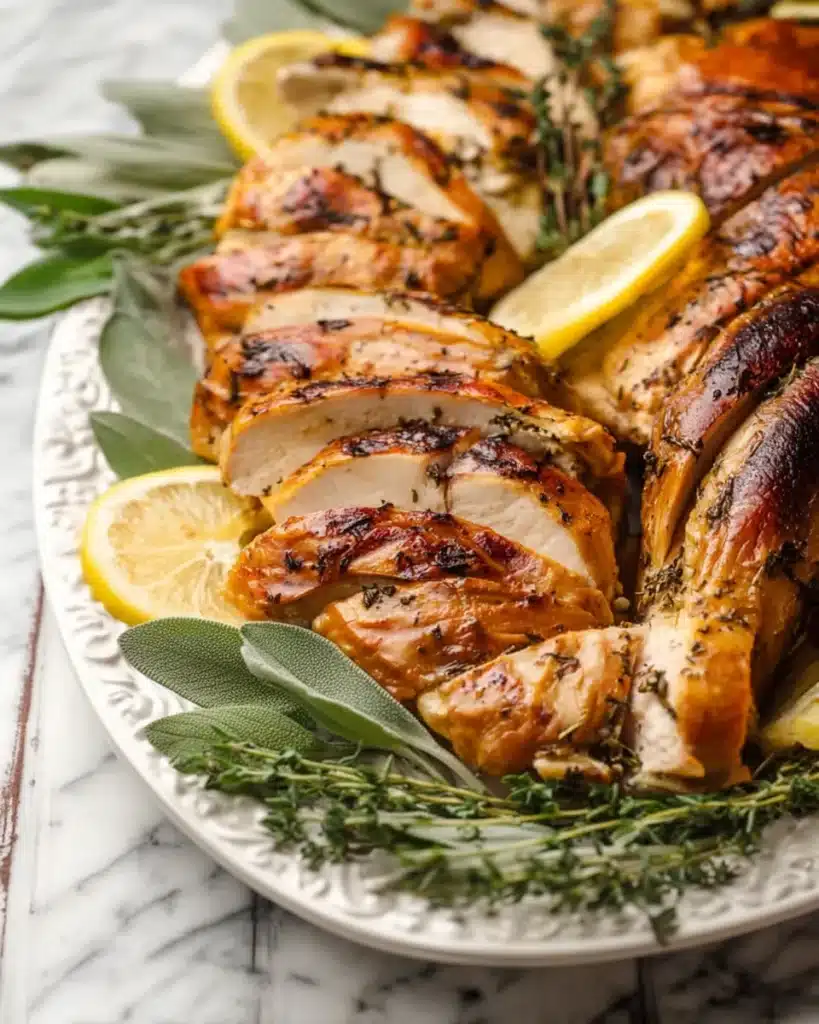
Once roasted, let your turkey rest for 20 minutes. This allows the juices to redistribute evenly, keeping every slice moist.
Why Resting Improves Juiciness
When hot meat rests, fibers relax and reabsorb juices. Cutting too soon releases all that moisture, leaving the turkey dry. So, rest first, carve second.
Basic Carving Steps for Clean Slices
Use a sharp knife to remove the legs and thighs first. Then slice the breast meat against the grain for smooth, even pieces. Arrange them neatly on a platter for a stunning presentation.
Flavor, Texture, and Serving Tips
A perfect roast turkey combines crispy skin with buttery, juicy meat. For added shine, brush melted butter over the skin before serving.
Achieving Crispy Skin and Juicy Meat
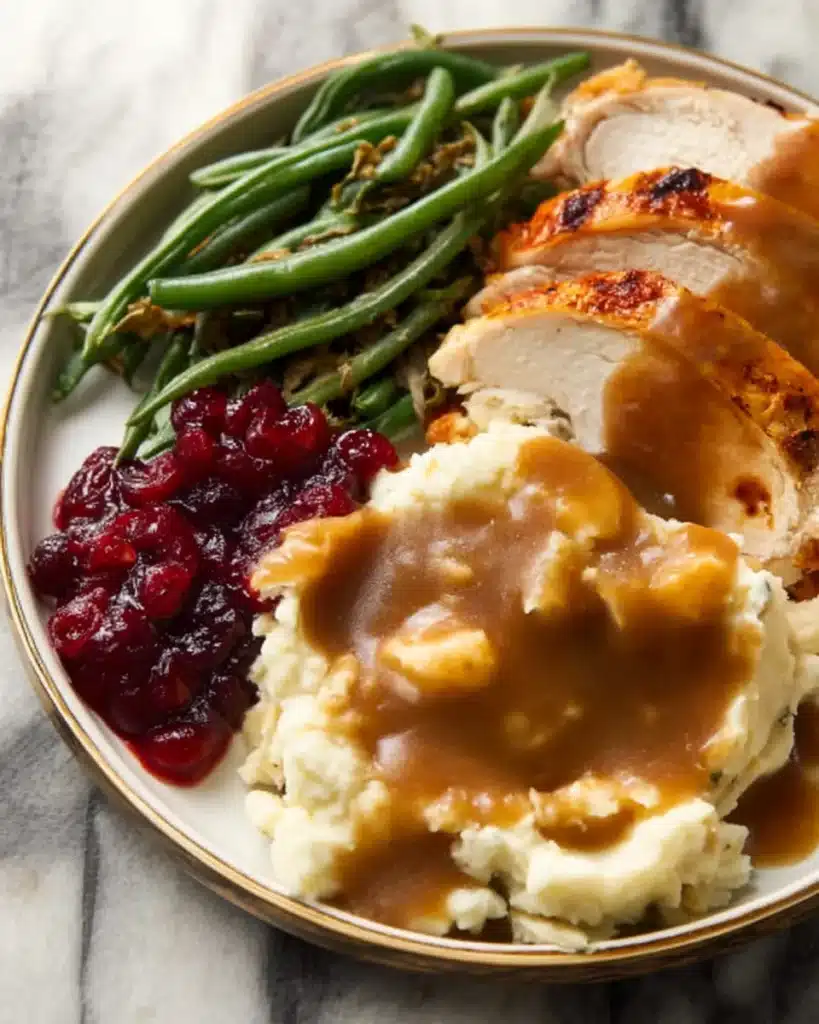
Drying the bird thoroughly and roasting on a rack helps air circulate, creating that irresistible crunch. Don’t skip the herb butter—it’s the secret to flavor.
Serving with Classic Thanksgiving Sides
Pair your roast turkey with Southern maple sweet potato casserole for Thanksgiving, Garlic mashed potatoes recipe for Thanksgiving, and Thanksgiving glazed carrots recipe holiday for a balanced, comforting feast.
Recipe Notes and Expert Tips
Use a roasting rack for crisp skin and even airflow. Avoid adding liquid if you prefer a golden finish. Always let the turkey come to room temperature before roasting—it helps it cook evenly.
Using Fresh vs Dried Herbs
Fresh herbs bring bright, aromatic flavor. However, dried herbs work too; just use one teaspoon for every tablespoon of fresh.
Common Mistakes to Avoid
Don’t skip drying the turkey. Avoid overcrowding the oven, and never cut before resting. These simple steps make all the difference.
Storing and Reusing Leftovers
Leftovers keep the celebration going. Always refrigerate within two hours to prevent spoilage.
Refrigerating and Freezing Guidelines
Store cooked turkey in airtight containers for up to four days in the fridge or three months in the freezer. Let it cool completely before sealing.
Best Ways to Use Leftover Turkey
Make turkey sandwiches, soups, or casseroles. Try pairing it with Balsamic glazed Brussels sprouts dinner side for a quick meal the next day.
Frequently Asked Questions
How many hours does it take to roast a turkey? About 13 minutes per pound at 350°F. A 14-pound turkey cooks in roughly three hours.
How to cook a roast turkey? Season generously, stuff with aromatics, and roast on a rack until 165°F internally.
Should I roast my turkey at 325 or 350? 350°F is ideal—it gives crisp skin and juicy meat without drying out.
What is the secret to a moist turkey? Let the turkey rest before carving and spread butter under the skin for locked-in flavor.
Related Recipes to Try
- Southern maple sweet potato casserole for Thanksgiving
- Creamy scalloped potatoes Christmas dinner side
- Classic Christmas prime rib holiday recipe
Conclusion
Roast turkey might seem intimidating, but with a little patience, it turns into the most rewarding centerpiece. The crispy, herb-buttered skin and juicy meat make every slice a celebration of flavor and warmth.
Final Thoughts on Perfect Roast Turkey
With these simple steps, your roast turkey will shine every Thanksgiving. Pair it with your favorite sides, serve it with love, and enjoy the smiles around the table. For more festive ideas, visit Pinterest for cozy inspiration.
Print
Roast Turkey Recipe – Juicy, Crispy, and Perfect for Thanksgiving
- Total Time: 4 hours 20 minutes
- Yield: 12 servings 1x
Description
Juicy Roast Turkey with crispy, herb-buttered skin and tender meat. Simple steps, minimal fuss, and perfect results for Thanksgiving or any cozy feast.
Ingredients
1 whole turkey (14 to 16 pounds)
Salt and pepper to taste
1 cup unsalted butter, softened
1 tablespoon fresh sage, finely chopped
1 tablespoon fresh thyme, finely chopped
1 tablespoon fresh rosemary, finely chopped
4 cloves garlic, minced
1 teaspoon salt
1/2 teaspoon pepper (or to taste)
1 lemon, halved
A few sprigs each of fresh sage, thyme, and rosemary
1 head garlic, cloves separated and peeled
Instructions
1. Let turkey and butter sit at room temperature for 1 hour.
2. Mix softened butter with chopped sage, thyme, rosemary, minced garlic, salt, and pepper.
3. Preheat oven to 450°F and place rack in the lower third.
4. Remove packaging, giblets, and any excess liquid; pat the turkey very dry.
5. Season the turkey with salt and pepper inside and out.
6. Stuff the cavity with lemon halves, herb sprigs, and peeled garlic cloves.
7. Rub the herb butter all over the skin; tuck wings and tie legs if desired.
8. Set turkey breast side up on a rack in a roasting pan.
9. Place turkey in the oven and immediately lower the temperature to 350°F.
10. Roast about 13 minutes per pound (about 3 hours for a 14-pound bird) until the thickest part of the thigh reaches 165°F.
11. If the skin browns too early, loosely tent the turkey with foil.
12. When done, tilt the turkey to drain juices, transfer to a board, and rest 20 minutes before carving.
Notes
Use a roasting rack to elevate the turkey for crispier skin.
Avoid adding liquid to the pan if you prefer a crisper finish.
Dried herbs can replace fresh (use about 1 teaspoon dried per 1 tablespoon fresh).
Use sea salt or kosher salt; reduce or skip added salt if the turkey is brined.
Don’t wash the turkey; pat it dry instead.
Read the recipe fully before starting to avoid missing ingredients or steps.
Turkey thawing guide: 1 day per 5 pounds in the fridge.
Leftovers: refrigerate within 2 hours; keep 3–4 days or freeze 2–3 months.
Stuffing: cook separately for food safety and even doneness.
Texture and flavor: juicy meat with crispy, herb-infused skin.
No basting required; foil tent if skin darkens too quickly.
- Prep Time: 1 hour
- Cook Time: 3 hours
- Category: Thanksgiving
- Method: Roasting
- Cuisine: American
Nutrition
- Serving Size: 1 serving (about 6 oz cooked)
- Calories: 537
- Sugar: 1
- Sodium: 684
- Fat: 33
- Saturated Fat: 15
- Unsaturated Fat: 13
- Trans Fat: 1
- Carbohydrates: 3
- Fiber: 1
- Protein: 56
- Cholesterol: 234